
Host Plants for Pollinators - My Quest for Attracting Butterflies to My Garden by Elena Trindeva
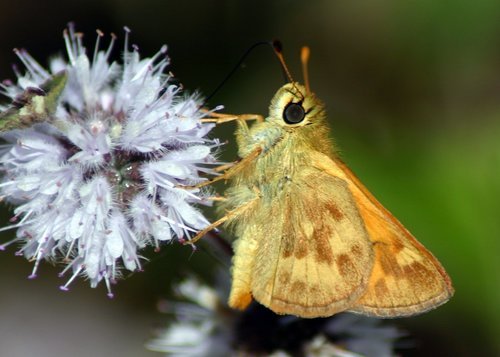
Image Credit: iNaturalist
As a child, I was fascinated by butterflies. Several decades later, I still am.
But I began to notice that not many butterflies were visiting my yard. Every now and then a Swallowtail would stop by for a quick visit, but that was it. Growing up, I remember seeing more butterflies in a single summer day than I was now seeing in an entire season. What had changed? I kept wondering.
It turned out I was missing a critical element—native plants. Almost everything in my garden was non-native. I had been gardening for two decades without knowing anything about native plants—shame on me!
Luckily, I met some wonderful gardeners who introduced me to the native plants of the Pacific Northwest. I started reading about the relationships between pollinators and native plants and learned something important: while planting nectar-rich flowers is helpful, it’s just as essential to include native host plants. These are the plants that feed pollinators in their larval stage. They are critical for pollinators to survive—and, in fact, for songbirds as well, since larvae are a primary food source for baby birds.
So I began my hunt for native plants. I visited nurseries near and far, attended plant sales, and ordered seeds. I found wonderful resources at Go Natives Nursery in Shoreline, Woodbrook Native Plant Nursery in Gig Harbor, and Oxbow Farm & Conservation Center in Carnation. I also attended the native plant sale at the Bellevue Botanical Garden and ordered seeds from Northwest Meadowscapes. Slowly, my collection grew. I even started shrinking my lawn to make room for more plantings. I added a butterfly “puddling” dish—a simple tray filled with pebbles and water—to create a welcoming habitat.
Then, sometime in July—hallelujah! I spotted a small orange butterfly I had never seen before. Somehow, she had found my garden. I was thrilled. After looking it up, I discovered it was a Woodland Skipper. Soon after, several Swallowtail butterflies returned, along with many other insects. And all of this happened just a few months after I introduced native plants. I was overjoyed. Now, I find myself waiting (somewhat impatiently!) to see who will visit this summer.
For fellow insect enthusiasts, here is a short list of host plants for the Pacific Northwest:
Native Trees:
Scouler’s willow (Salix scouleriana),
Sitka willow (Salix sitchensis),
Garry oak (Quercus garryana),
Bitter cherry (Prunus emarginata),
Red alder (Alnus rubra),
Douglas fir (Pseudotsuga menziesii),
Cascara sagrada (Frangula purshiana)
Native Shrubs:
Pacific ninebark (Physocarpus capitatus),
Red flowering currant (Ribes sanguineum),
Serviceberry (Amelanchier alnifolia),
Oregon grape (Mahonia aquifolium),
Salal (Gaultheria shallon),
California lilac (Ceanothus velutinus),
Kinnikinnick (Arctostaphylos uva-ursi)
Native Herbaceous Plants:
Yarrow (Achillea millefolium),
Bigleaf lupine (Lupinus polyphyllus),
Riverbank lupine (Lupinus rivularis),
Henderson’s checkermallow (Sidalcea hendersonii),
Pearly everlasting (Anaphalis margaritacea),
Western goldenrod (Solidago lepida),
Early blue violet (Viola adunca),
Stream violet (Viola glabella),
Stinging nettle (Urtica dioica)
And let’s not forget native grasses. These aren’t turf grasses, but beautiful, clump-forming plants—many of them drought-tolerant—like Idaho fescue (Festuca idahoensis) and tufted hairgrass (Deschampsia cespitosa). They serve as host plants for dozens of insect species.
Happy native plant gardening!